LabMatch
A matching tool that reduces twenty-eight faculty pages to a single input: what a student wants to study.
Background
Research experience is one of the strongest factors in psychology graduate admissions, yet there is no central directory for available research assistantships. Students have to search through 28 faculty pages, interpret research descriptions written for academic audiences, and email professors individually to find out who is accepting students
I went through that process myself, and then watched classmates struggle with the usability as well
Most students I interviewed stopped partway through the list, meaning potentially relevant research opportunities were often overlooked
Understanding the problem
- Students describe their interests in plain language while faculty describe their work in field vocabulary, making this mismatch the search problem.
- Faculty pages describe research interests, but they rarely explain what the day-to-day experience of working in the lab looks like
- Students hesitate to email a professor without knowing why they would be a fit, so the reason for a match matters as much as the match.
Product vision and solution
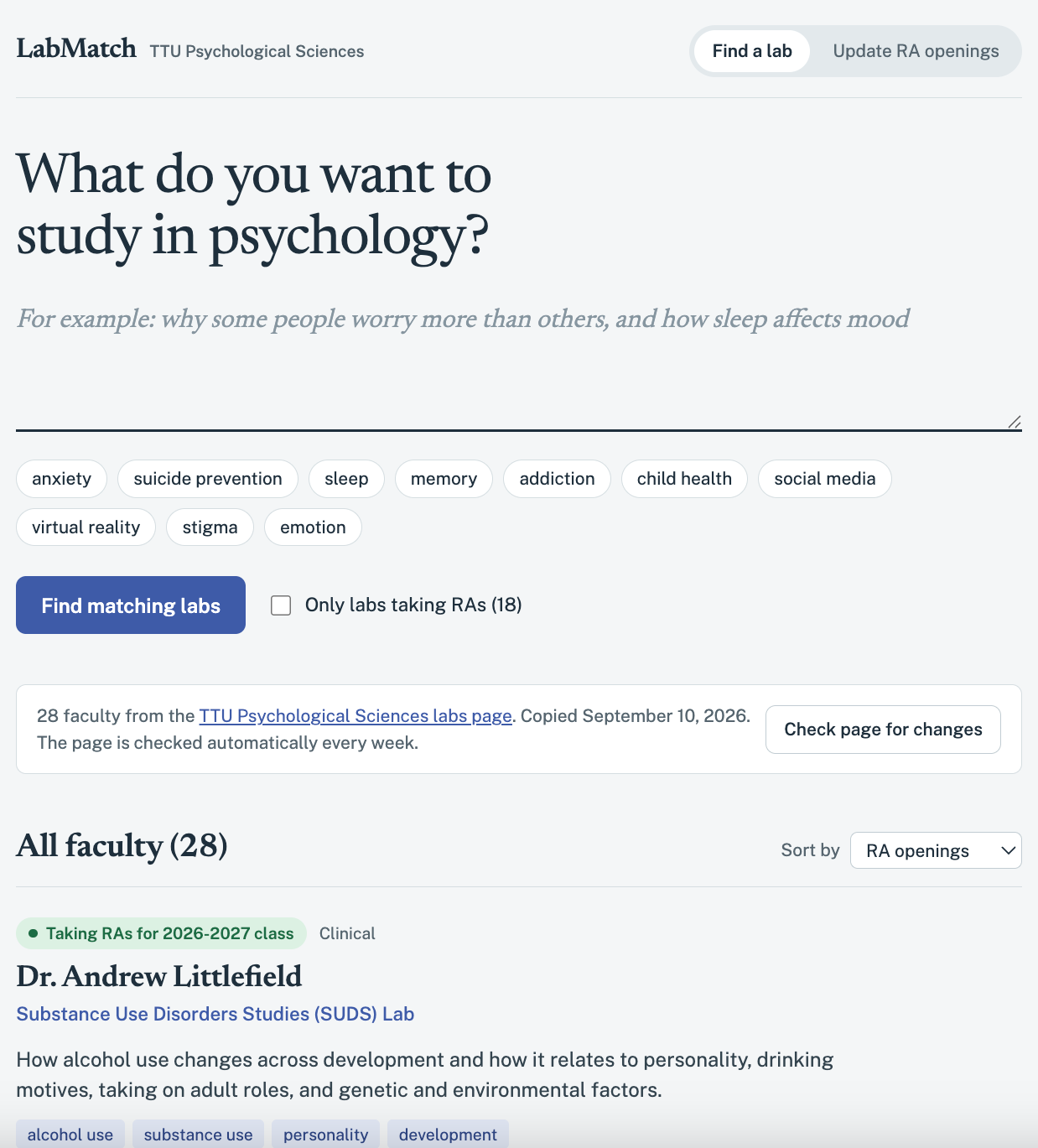
LabMatch takes a stated research interest and returns labs whose work overlaps, ranked, each with the basis for the match, current assistant availability, and contact details consolidated in one view
Defining the MVP
- Plain words, not keywords: Open text with suggested words of ineterst, so students never have to guess faculty vocabulary.
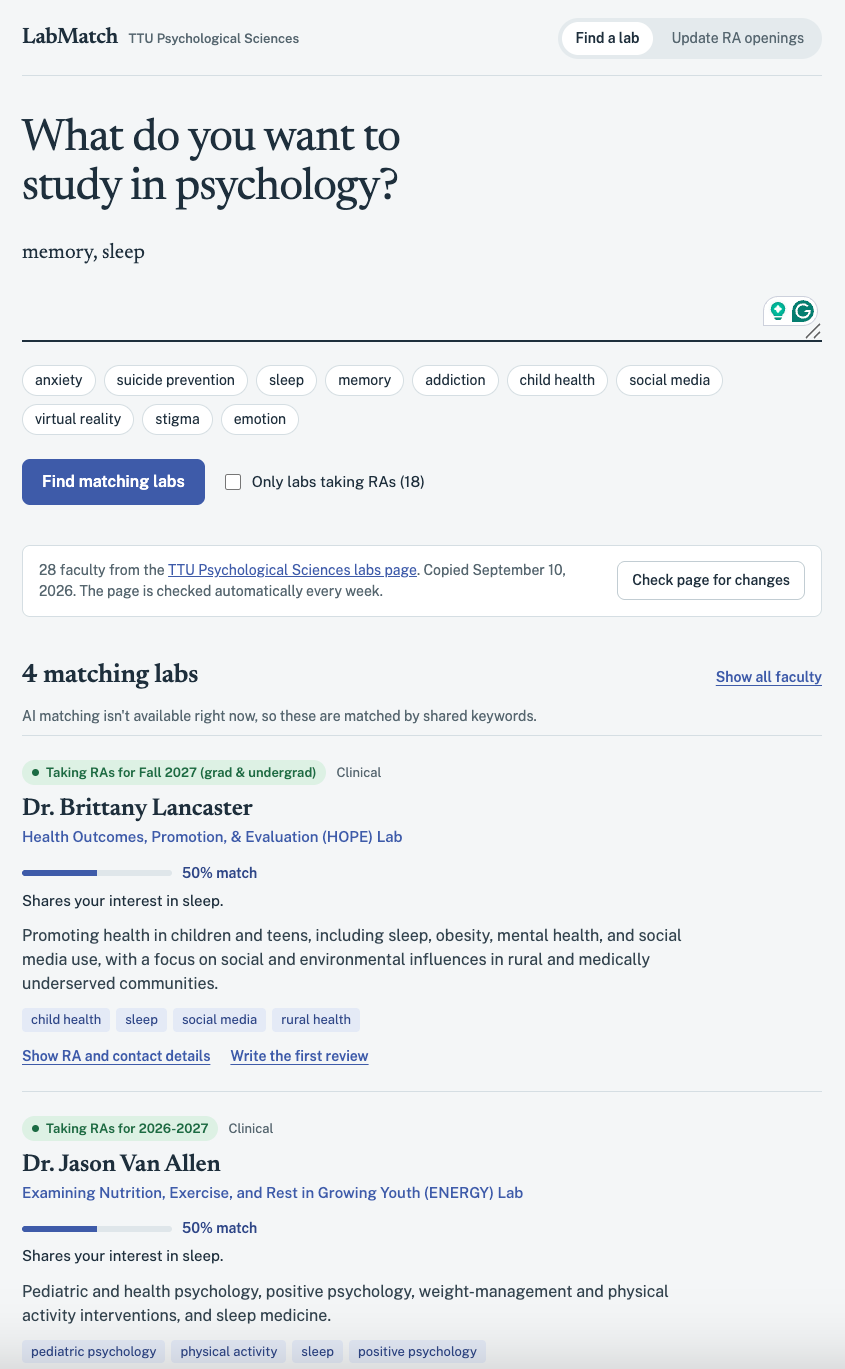
- Show why it matched: A ranked list is only useful if students understand why a result is recommended. Each result shows the areas of overlap as well as a percentage "fit" so students can decide whether it is worth contacting the professor
- Don't leave users stuck: When AI matching is unavailable, the tool falls back to shared keywords and clearly indicates that the match is less precise. A weaker result is better than no result
- Show when information may be outdated: Faculty data is copied from the department site, so the copy date is shown.
Anonymous lab reviews
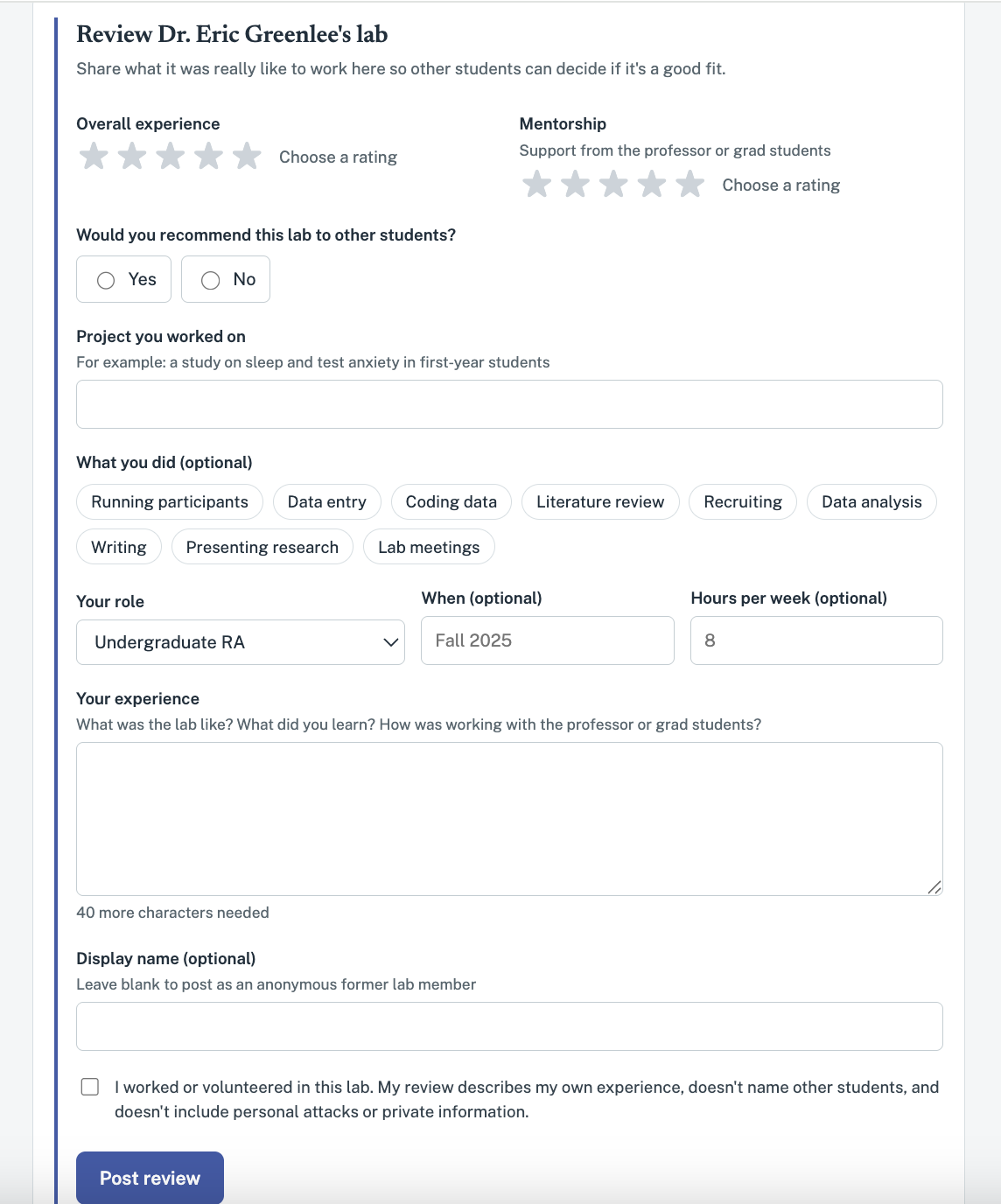
Match quality is only the first step in the decision making process. A key factor is knowing what a lab is like to work in, which students rarely share under their own name. Former assistants can review a lab anonymously: overall experience, grad student mentorship, whether they would recommend it, their project, hours per week, and the work they did.
Anonymity can make reviews more honest, but it can also make them easier to misuse. To keep feedback constructive, the form relies on structured ratings, requires a minimum length, and asks reviewers to confirm that they are sharing their own experience without naming other students. Reviews are identified by role and term rather than by name